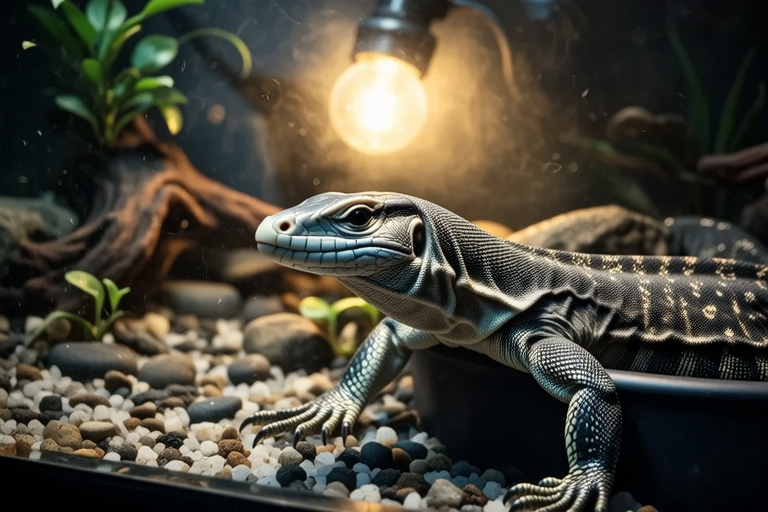
Pet Paradise: Setting Up the Perfect Habitat for Water Monitors
Water monitors (Varanus salvator) are fascinating reptiles that require a well-planned and meticulously maintained habitat to thrive. As one of the largest lizards in the world, they demand ample space, specific environmental conditions, and a balanced diet. This guide aims to help pet owners create an ideal living environment for their water monitors, ensuring their health and happiness.
Ideal Tank Size
The first step in creating a perfect habitat for your water monitor is choosing the right tank size. Water monitors are active and need plenty of room to move around. A juvenile water monitor can comfortably live in a 55-gallon tank, but as they grow, you will need to upgrade to a larger enclosure. Adult water monitors require a minimum of 8 feet in length, 4 feet in width, and 4 feet in height. The enclosure should be spacious enough to allow for swimming, climbing, and basking.
Water and Land Area Ratio
A crucial aspect of the habitat is the water-to-land ratio. Water monitors spend a significant amount of time both in and out of the water. A recommended ratio is about 60% water and 40% land. The water area should be deep enough for the monitor to fully submerge itself, with a depth of at least 3 feet being ideal. The land area should provide a dry basking spot and a variety of climbing structures.
Temperature and Humidity Requirements
Maintaining the correct temperature and humidity levels is vital for your water monitor’s health. The ideal temperature range for a water monitor’s habitat is between 80°F and 90°F (27°C to 32°C). The basking spot should reach 95°F to 100°F (35°C to 38°C). Use multiple thermometers to ensure accurate readings throughout the enclosure.
Humidity levels should be kept between 70% and 80%. This can be achieved through regular misting, a humidifier, or a water feature like a waterfall. Ensure proper ventilation to prevent mold growth and respiratory issues.
Lighting Needs
Proper lighting is essential for simulating natural sunlight and providing UVB radiation, which helps in calcium absorption. Install full-spectrum UVB bulbs over the basking area. These bulbs should be replaced every six months, even if they still appear to work, as the UVB output diminishes over time. Additionally, provide a heat lamp to maintain the basking spot’s temperature.
In addition to UVB and heat lamps, consider adding ambient lighting to simulate day and night cycles. This can help regulate your monitor’s circadian rhythms and promote overall health.
Suitable Substrates
Selecting the right substrate for your water monitor’s habitat is important for its comfort and safety. For the land area, coconut fiber or reptile-safe mulch are good options as they retain moisture and provide a natural look. Avoid substrates that could be ingested, such as sand or small gravel, which may cause impaction.
The water area should have a smooth substrate, like river rocks or large pebbles, to prevent injury from sharp edges. Ensure that any substrate used in the water area is too heavy for your monitor to ingest accidentally.
Appropriate Hiding Spots
Water monitors need places to hide and feel secure. Provide multiple hiding spots, both on land and in the water. On land, use caves, hollow logs, or commercially available reptile hides. In the water, include floating platforms or submerged caves where your monitor can retreat when feeling stressed or threatened.
Ensure these hiding spots are large enough for your monitor to fit comfortably and that they are easy to clean and disinfect.
Necessary Enrichment Elements
To keep your water monitor mentally stimulated and physically active, incorporate enrichment elements into its habitat. Floating toys, branches for climbing, and puzzle feeders can encourage exploration and problem-solving behaviors. Rotate these items periodically to prevent boredom.
Additionally, provide a variety of surfaces for climbing, such as sturdy branches or artificial vines, to mimic the natural environment and encourage exercise.
Dietary Considerations
Water monitors are carnivorous and require a diet rich in proteins. Their menu can include feeder rodents, fish, insects, and occasional fruits. Juvenile water monitors should be fed daily, while adults can be fed every other day. It is crucial to offer a balanced diet to support their growth and health.
Supplement their food with calcium and vitamins to prevent deficiencies. Consult a veterinarian specializing in reptiles for advice on supplementation amounts.
Health Monitoring Tips
Regular health checks are essential for early detection of potential issues. Monitor your water monitor’s appetite, behavior, and physical condition daily. Look for signs of illness, such as lethargy, loss of appetite, or unusual discharges. Schedule annual veterinary check-ups to ensure your pet remains healthy.
Keep a close eye on the habitat’s cleanliness and hygiene. Regularly clean and disinfect the enclosure, replace dirty water, and remove uneaten food promptly to prevent bacterial growth and contamination.
Common Mistakes to Avoid
Setting up a habitat for a water monitor can be challenging. Here are some common mistakes to avoid:
- Insufficient Space: Not providing enough room for swimming and climbing can lead to stress and behavioral issues.
- Improper Temperature and Humidity: Incorrect temperature and humidity levels can cause respiratory infections and metabolic bone disease.
- Lack of UVB Lighting: Failure to provide UVB light can result in vitamin D3 deficiency and subsequent health problems.
- Unsafe Substrates: Using inappropriate substrates can lead to ingestion and blockages, causing serious health issues.
- Overfeeding: Excessive feeding can lead to obesity and related health problems.
- Ignoring Enrichment: Failing to provide mental and physical stimulation can lead to boredom and destructive behaviors.
By avoiding these common pitfalls and following the guidelines outlined in this article, you can create a thriving and enriching habitat for your water monitor. Remember, the key to successful pet ownership is dedication, knowledge, and love.
