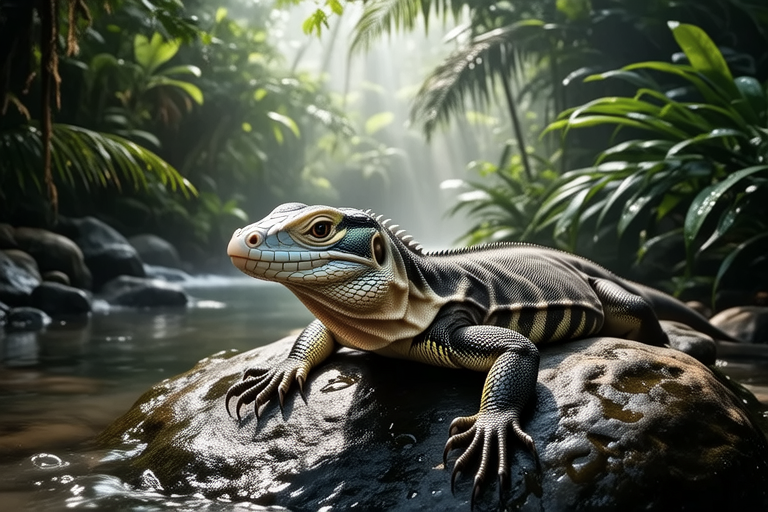
Top 10 Amazing Facts About Water Monitors That Will Blow Your Mind
Welcome to an incredible journey into the world of one of the most fascinating reptiles on Earth – the water monitor (Varanus salvator). These creatures are not only large but also possess a range of unique adaptations that make them stand out in the animal kingdom. From their impressive physical attributes to their remarkable behaviors and dietary preferences, water monitors have it all. Dive into this article to uncover ten amazing facts about these creatures that will leave you in awe.
Fact 1: The Largest Lizards on Earth
The water monitor is the second-largest lizard species after its cousin, the Komodo dragon. Male water monitors can reach lengths of up to 3 meters (9.8 feet) and weigh as much as 50 kilograms (110 pounds). Imagine a creature that can grow to be as long as a grown man lying down! Their size is not just impressive but also serves practical purposes. Larger body sizes help them maintain their core temperature better and allow them to take down larger prey. This makes them apex predators in their ecosystems.
Fact 2: Masters of Camouflage
Water monitors have evolved to blend seamlessly into their environments. Their scales come in various shades of brown, green, or gray, depending on the region they inhabit. This coloration helps them avoid detection by both predators and potential prey. Additionally, their skin texture mimics the bark of trees, making them almost invisible when perched on branches. This adaptation allows them to ambush unsuspecting animals with precision and stealth.
Fact 3: Exceptional Swimmers
As their name suggests, water monitors are adept swimmers. They can dive up to 45 meters (148 feet) deep and remain submerged for up to 30 minutes. Their strong limbs and flattened tails act like paddles, propelling them through water at speeds of up to 20 kilometers per hour (12 miles per hour). This ability to swim is crucial for their survival, as it enables them to escape from threats, catch fish, and even hunt in shallow waters.
Fact 4: Versatile Diet
Water monitors are opportunistic feeders, meaning they will eat almost anything they can catch. Their diet includes fish, frogs, birds, eggs, insects, and even smaller mammals. They are known to raid nests of crocodiles and snakes, consuming eggs and hatchlings. In some regions, they are also known to scavenge for carrion. This diverse diet contributes to their role as ecosystem regulators, keeping populations of certain species in check.
Fact 5: Powerful Climbers
Despite their bulk, water monitors are excellent climbers. Their sharp claws and muscular bodies enable them to scale trees with ease. They often perch high up in the canopy, waiting for prey to pass beneath. This behavior is particularly useful for catching birds and small mammals that may not be accessible on the ground. Their climbing skills also provide a safe retreat from terrestrial predators.
Fact 6: Intelligent Hunters
Water monitors are highly intelligent creatures with keen senses. They use their acute sense of smell to track prey over long distances. Once they locate a potential meal, they employ various hunting techniques, such as ambush, pursuit, and scavenging. Their intelligence extends beyond hunting; they have been observed using tools, like rocks, to crack open turtle shells for the meat inside. This level of problem-solving is rare among reptiles.
Fact 7: Social Creatures
Contrary to popular belief, water monitors are not solitary animals. They are known to live in groups, especially during breeding season. Males compete for females by engaging in aggressive displays and fights. Females lay clutches of 10 to 50 eggs in burrows or termite mounds, where the eggs are incubated naturally. After hatching, juvenile monitors stay close to their mother for protection until they are old enough to fend for themselves.
Fact 8: Adaptability to Various Habitats
Water monitors are incredibly adaptable and can thrive in a wide range of habitats, including forests, mangroves, swamps, and grasslands. They are native to Southeast Asia and parts of India, but due to the pet trade, they have been introduced to areas like Florida in the United States. Their ability to adapt to different environments has allowed them to establish populations in regions far from their natural range.
Fact 9: Long Lifespan
Water monitors have a lifespan of around 10 to 20 years in the wild, with some individuals living longer in captivity. Their longevity is attributed to their ability to avoid predators and secure sufficient food sources. However, they face threats from human activities such as deforestation, pollution, and hunting. Conservation efforts are crucial to ensure the survival of these magnificent creatures for future generations.
Fact 10: Cultural Significance
In many cultures, water monitors hold significant symbolic value. For example, in Malaysia, they are considered symbols of good luck and prosperity. They are also revered in Hindu mythology, where they are associated with the god Vishnu. These cultural ties highlight the importance of water monitors in local traditions and underscore the need for their preservation.
Call to Action
Water monitors are truly remarkable creatures with a wealth of fascinating traits. From their impressive size to their versatile diets and social behaviors, there’s always something new to learn about these lizards. If you’re intrigued by these facts and want to delve deeper into the world of water monitors, consider visiting your local zoo or wildlife sanctuary. There, you can observe these incredible animals up close and gain a greater appreciation for their unique place in nature. Let’s work together to protect and preserve these magnificent creatures for future generations to enjoy.
