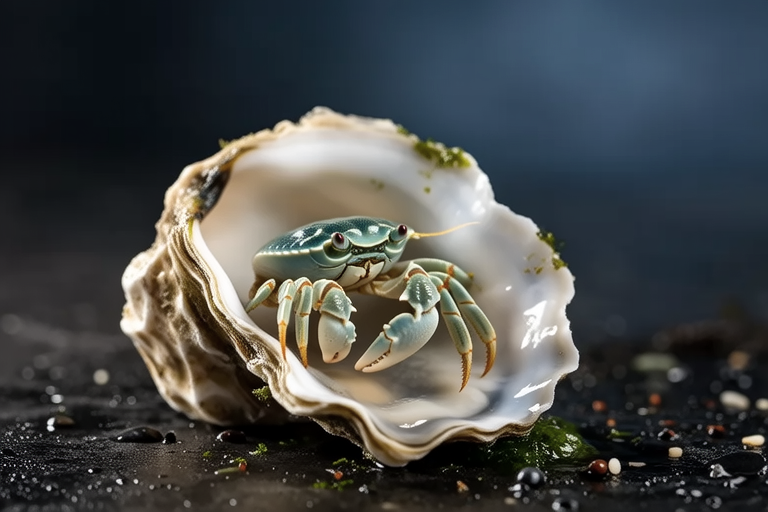
The Intricate World of Pea Crabs: Symbiotic Masters of the Bivalve Realm
In the vast oceanic expanse, where life teems with diversity and complexity, one of the most intriguing relationships exists between tiny crustaceans called pea crabs (Pinnotheres sp.) and their mollusk hosts. These diminutive creatures have mastered the art of living within the confines of bivalves like clams and mussels, creating a unique symbiotic partnership that has fascinated marine biologists for decades. This article delves into the adaptations, roles, and interactions of pea crabs within their marine ecosystem, highlighting recent research that illuminates this captivating relationship.
Adaptations for Life Inside Bivalves
Pea crabs have evolved remarkable adaptations to thrive in the enclosed environment of their bivalve hosts. Their small size, typically measuring less than an inch, allows them to fit snugly within the protective shells of their hosts. They possess flattened bodies, enabling them to maneuver easily through narrow spaces, and their delicate limbs facilitate movement without causing harm to the sensitive tissues of their hosts. Additionally, pea crabs lack the hard outer shell seen in many other crab species, making them more flexible and less likely to damage their hosts.
One of the most significant adaptations is their ability to feed on the host’s reproductive products, such as eggs and gametes. By consuming these nutrients, pea crabs contribute to the regulation of their host’s population, preventing overproduction and maintaining ecological balance. In return, the bivalves provide protection from predators and a stable source of food.
The Role of Pea Crabs in the Ecosystem
Pea crabs play a crucial role in the marine ecosystem by serving as bioindicators of environmental health. Their presence can indicate the overall well-being of their host populations, which in turn reflects the condition of the surrounding habitat. Furthermore, pea crabs contribute to nutrient cycling within the ecosystem by breaking down organic matter and redistributing it among various organisms. This process supports the growth of algae and other primary producers, ultimately benefiting the entire food web.
Recent studies have also revealed that pea crabs may influence the behavior of their hosts. For example, some researchers suggest that the presence of pea crabs could alter the reproductive strategies of their hosts, potentially leading to changes in the timing and success of spawning events. This finding underscores the intricate nature of symbiotic relationships and highlights the importance of considering these interactions when studying marine ecosystems.
Mating Habits and Finding New Homes
The life cycle of pea crabs begins with the release of larvae into the water column, where they undergo several stages of development before settling onto a suitable host. Once attached, the larvae metamorphose into juvenile crabs, which then enter the gills or mantle cavity of their host. The female pea crab remains within the host throughout her lifetime, while males leave to find new mates.
Interestingly, pea crabs have developed specialized mechanisms for finding new homes when necessary. When a host becomes overcrowded or unhealthy, juvenile crabs may disperse to nearby bivalves, ensuring the continuation of their species. This dispersal strategy helps maintain genetic diversity and prevents the depletion of resources within individual hosts.
Recent Research and Discoveries
Advances in molecular biology and genetics have provided valuable insights into the evolutionary history and genetic diversity of pea crabs. Researchers have identified distinct genetic lineages within certain populations, suggesting that these lineages may have adapted to specific host species or environmental conditions. Understanding these genetic variations could help conservationists develop targeted strategies for preserving marine biodiversity.
Additionally, recent studies have explored the potential impact of climate change on pea crab populations. Rising sea temperatures and ocean acidification may affect the availability of suitable hosts and the ability of pea crabs to survive and reproduce. As a result, monitoring pea crab populations could serve as an early warning system for broader ecological shifts within marine environments.
Implications for Marine Biodiversity
The study of pea crabs and their symbiotic relationships with bivalves offers important lessons for marine conservation efforts. By understanding the factors that influence the health and distribution of pea crab populations, scientists can better predict how changes in the environment might affect other species and ecosystems. Moreover, the discovery of novel adaptations and behaviors within pea crabs challenges traditional notions of symbiosis and encourages further exploration of the complex interdependencies that shape marine communities.
As we continue to unravel the mysteries of pea crabs and their hosts, it becomes increasingly clear that these tiny crustaceans are more than just passive passengers in the bivalve world. They are active participants in a dynamic relationship that plays a vital role in maintaining the delicate balance of marine ecosystems. By appreciating the intricacies of this symbiosis, we gain a deeper understanding of the interconnectedness of all life forms and the importance of protecting our oceans for future generations.
