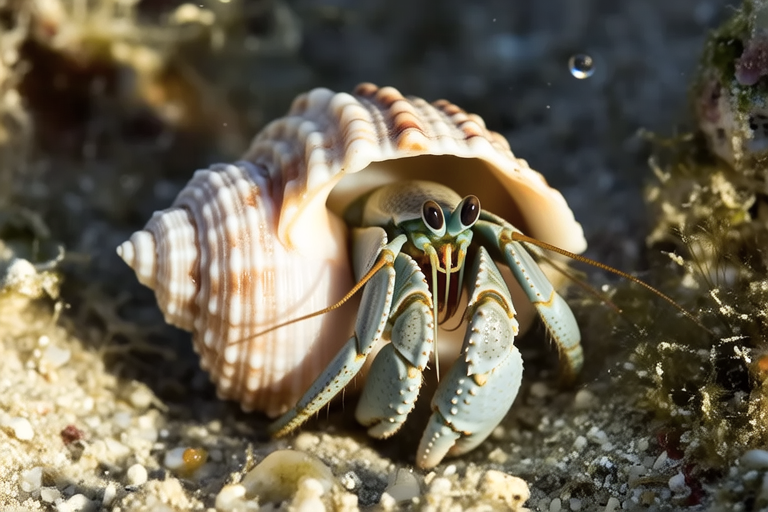
Exploring the Intriguing World of Hermit Crabs
Hermit crabs have long captured the imagination of marine biologists and pet enthusiasts alike. These fascinating creatures live a unique lifestyle that is both captivating and complex. From their habitat selection to their social interactions, hermit crabs offer a wealth of knowledge about marine ecosystems and the adaptability of life in the ocean. This article delves into the world of hermit crabs, exploring their behaviors, adaptations, and the ethical considerations of keeping them as pets.
Habitat Selection: Finding the Perfect Shell
One of the most distinctive features of hermit crabs is their reliance on shells for protection. Unlike other crustaceans, hermit crabs lack a hard exoskeleton to shield themselves from predators. Instead, they seek out empty mollusk shells to inhabit, using them as mobile homes. The selection of a suitable shell is crucial for their survival, as it provides defense against potential threats and helps regulate their body temperature and moisture levels.
Hermit crabs are highly selective when choosing their shells. They prefer shells that are large enough to accommodate their growing bodies but not so large that they become cumbersome. The shape and size of the shell also play a significant role in their decision-making process. Scientists have observed that hermit crabs often engage in “shell fights” with one another, where they compete for the best available shells. These battles can be intense, with crabs using their claws to pry open or defend their chosen shell.
Shell Changing Behaviors: A Lifelong Process
The process of changing shells is an ongoing part of a hermit crab’s life. As they grow, they must periodically find new shells to ensure their safety and comfort. This behavior is not only essential for their physical well-being but also plays a vital role in maintaining the health of marine ecosystems. When a hermit crab vacates its old shell, it becomes available for other sea creatures to inhabit, promoting biodiversity and resource sharing within the ecosystem.
During a shell change, hermit crabs carefully inspect potential new homes before making a final decision. They may try on several shells before finding one that suits them perfectly. Once they’ve found a suitable shell, they will quickly move into it, leaving behind their old home. This process can take anywhere from a few minutes to several hours, depending on the availability of shells and the urgency of the situation.
Social Interactions: A Community of Crustaceans
Despite their solitary appearance, hermit crabs are actually quite social creatures. They often gather in groups, forming communities where they interact with one another in various ways. While they do not form pair bonds like some animals, hermit crabs can exhibit cooperative behaviors, such as working together to find food or defending their territory from intruders.
Within these communities, hermit crabs have developed complex communication systems. They use chemical signals, touch, and visual cues to convey information about food sources, potential dangers, and mating opportunities. These interactions are crucial for the survival of the species, as they help ensure that individuals are aware of important environmental changes and can respond accordingly.
Adaptations for Survival: Navigating Marine Environments
Hermit crabs have evolved numerous adaptations that allow them to thrive in their marine environments. One of the most notable is their ability to breathe both in and out of water. While they primarily live on land, hermit crabs require access to water to moisten their gills and prevent desiccation. To achieve this, they often live in coastal areas where they can easily access both terrestrial and aquatic habitats.
In addition to their respiratory adaptations, hermit crabs have developed strong claws for grasping and manipulating objects, including their shells. Their legs are also highly specialized, allowing them to move efficiently across various terrains. These physical attributes, combined with their resourcefulness and intelligence, make hermit crabs formidable survivors in their natural habitats.
Nocturnal Activities: Nighttime Explorers
Most hermit crab species are nocturnal, meaning they are most active during the night. This behavior is thought to be an adaptation that helps them avoid daytime predators and harsh sunlight. During the day, hermit crabs typically remain hidden in their shells or seek shelter in crevices and other protected areas. At night, however, they emerge to explore their surroundings, search for food, and engage in social interactions.
While hermit crabs are primarily scavengers, feeding on decaying plant and animal matter, they are opportunistic feeders and will consume a wide variety of foods. In the wild, they play an important role in breaking down organic material and recycling nutrients back into the ecosystem. This process helps maintain the balance of marine environments and supports the growth of other organisms.
Myths Surrounding Hermit Crabs
Despite their popularity as pets, there are many misconceptions about hermit crabs that need to be addressed. One common myth is that hermit crabs are easy to care for and require minimal attention. While hermit crabs can be relatively low-maintenance compared to other pets, they still have specific needs that must be met to ensure their health and happiness. Providing a suitable environment, proper diet, and regular shell changes are all essential components of responsible hermit crab ownership.
Another misconception is that hermit crabs are solitary creatures that do not require companionship. As we’ve seen, hermit crabs are actually quite social and benefit from living in groups. Keeping multiple hermit crabs together can provide them with the stimulation and interaction they need to thrive. However, it’s important to ensure that the enclosure is large enough to accommodate all the crabs comfortably and that there are plenty of resources available to prevent competition and stress.
Ethical Considerations: Responsible Pet Ownership
When considering hermit crabs as pets, it’s important to approach the decision with responsibility and awareness. Many pet stores sell hermit crabs that have been taken from the wild, which can have negative impacts on local populations and ecosystems. To promote ethical pet ownership, it’s recommended to purchase captive-bred hermit crabs whenever possible. Additionally, providing a suitable habitat, proper nutrition, and regular veterinary care are essential for ensuring the well-being of your pet hermit crabs.
Creating a habitat that mimics the natural environment of hermit crabs is crucial for their health and happiness. This includes providing a substrate for digging, a shallow water dish for drinking and shell soaking, and a variety of shells for exploration and shell changing. It’s also important to regularly monitor the humidity levels in the enclosure, as hermit crabs require a moist environment to prevent dehydration.
Conclusion: Celebrating the Unique Lives of Hermit Crabs
Hermit crabs are truly remarkable creatures with a fascinating lifestyle that is both intricate and adaptable. Through their habitat selection, shell changing behaviors, social interactions, and nocturnal activities, hermit crabs demonstrate the incredible diversity and complexity of marine ecosystems. By understanding and respecting their needs, we can better appreciate the role they play in our oceans and ensure that those kept as pets lead healthy and fulfilling lives.
