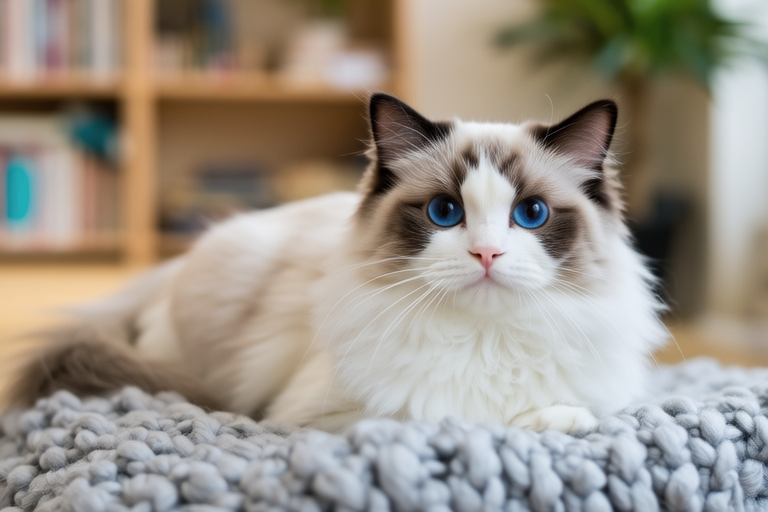
Top 10 Reasons Why Ragdolls Are the Ultimate Lap Pets
1. Unmatched Docility: One of the most striking traits of Ragdoll cats is their exceptional docility. Unlike many other breeds, Ragdolls have a tendency to go limp when picked up, much like a rag doll, giving them their name. This gentle demeanor makes them perfect for households with young children, who can enjoy cuddling without fear of scratches or bites. For instance, Sarah, a mother of two, recounts how her Ragdoll cat, Luna, has become a cherished companion for her energetic toddlers. “She’s so calm and patient,” Sarah says, “even when my kids accidentally pull her tail.” This docility also extends to handling, making grooming and vet visits stress-free experiences.
2. Affectionate Nature: Ragdolls are renowned for their loving and affectionate behavior towards their human companions. They often seek out physical contact, making them ideal lap pets. Many owners report that their Ragdolls will follow them around the house, waiting for the next opportunity to snuggle. Jane, a lifelong cat lover, adopted a Ragdoll named Charlie and noticed how quickly he became attached to her. “He always wants to be close to me, whether it’s curling up on my lap while I read or resting his head on my arm while I watch TV,” she shares. This deep bond makes Ragdolls particularly appealing for those seeking a companion animal.
3. Playful Yet Calm: Despite their laid-back demeanor, Ragdolls maintain a playful side that keeps them interesting and interactive. They enjoy chasing toys and playing games but are not overly demanding or hyperactive. This balance allows them to provide entertainment without overwhelming their owners. Mike, a first-time cat owner, found that his Ragdoll, Max, was the perfect mix of playfulness and calmness. “Max loves to play fetch with his favorite toy, but once he’s done, he’s happy to sit quietly beside me,” Mike explains. This adaptability makes Ragdolls suitable for various living environments and lifestyles.
4. Suitable for Multi-Pet Households: Ragdolls generally get along well with other pets, including dogs and other cats. Their friendly disposition and lack of aggression make them excellent candidates for multi-pet families. Lisa, who has both a dog and a cat, adopted a Ragdoll named Bella and was pleasantly surprised by how well she integrated into her home. “Bella and my dog, Rocky, have formed a great friendship,” Lisa says. “They play together and even sleep in the same room.” This compatibility ensures a harmonious environment for all pets in the household.
5. Easy to Groom: Ragdolls have a semi-long coat that requires regular brushing to prevent matting, but they are relatively low maintenance compared to some other long-haired breeds. Their coat does not shed excessively, making them a good choice for allergy sufferers. Emily, a Ragdoll owner, finds that weekly brushing is sufficient to keep her cat’s coat healthy and shiny. “It’s a manageable routine,” she comments, “and it gives us quality time together.” The ease of grooming contributes to the overall satisfaction of owning a Ragdoll.
6. Adaptability to Different Environments: Ragdolls are adaptable to various living situations, from small apartments to large homes. Their calm nature means they are not prone to anxiety in confined spaces or loud environments. John, who lives in a busy city apartment, adopted a Ragdoll named Oliver and discovered that he thrives in his urban setting. “Oliver enjoys the comfort of our apartment and is rarely bothered by the noise from outside,” John notes. This adaptability ensures that Ragdolls can fit seamlessly into different types of households.
7. Intelligence and Trainability: Ragdolls are intelligent cats that can learn tricks and respond well to positive reinforcement training. They are known to be easily trained to use a litter box and can even be taught commands like ‘sit’ or ‘come.’ Sarah, who trains her Ragdoll, Luna, says, “She’s incredibly smart and picks up new things quickly. It’s amazing to see how much she can learn.” This intelligence and trainability add another layer of enjoyment to owning a Ragdoll, offering endless opportunities for interaction and bonding.
8. Hypoallergenic Potential: While no cat breed is entirely hypoallergenic, Ragdolls are considered to produce fewer allergens than many other breeds due to their low-shedding coats. This characteristic makes them a better option for individuals with allergies. Dr. Emily, an allergist, recommends Ragdolls to her patients who are allergic to cats. “While there’s no guarantee for everyone,” she states, “many people find that Ragdolls cause fewer allergic reactions.” This potential for reduced allergen production is a significant factor for allergy sufferers considering a cat.
9. Gentle with Children: Ragdolls are exceptionally gentle and patient with children, making them an excellent choice for families. Their calm temperament and affectionate nature mean they are less likely to scratch or bite when mishandled. Maria, a mother of three, adopted a Ragdoll named Daisy and has seen firsthand how well she interacts with her children. “Daisy is so tolerant of the kids,” Maria says. “She lets them pet her and even join in their games.” This gentle disposition ensures a safe and enjoyable experience for both the cat and the children.
10. Longevity and Health: Ragdolls tend to live longer than many other cat breeds, with an average lifespan of 12 to 15 years. They are generally healthy cats, though like all breeds, they may be susceptible to certain genetic conditions. Regular veterinary care and a balanced diet contribute to their longevity. Dr. Mark, a veterinarian, emphasizes the importance of early health screenings. “Routine check-ups can help catch any potential issues early,” he advises. A healthy and long-lived Ragdoll promises years of companionship and joy.
