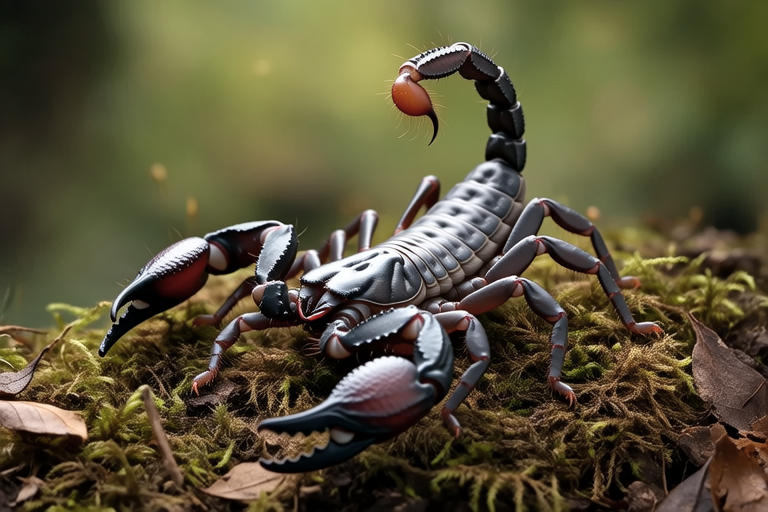
The Unique Scorpion Species: Heterometrus Spinifer
Introduction
In the vast and diverse world of arachnids, one species stands out for its distinctive features and intriguing behaviors: Heterometrus spinifer. This fascinating creature, commonly known as the spiny forest scorpion, is a member of the family Scorpionidae. Found predominantly in the lush rainforests of Southeast Asia, this scorpion has captivated the interest of researchers and nature enthusiasts alike. Its habitat stretches across regions such as Thailand, Malaysia, and parts of Indonesia, where it thrives in the dense undergrowth and humid conditions typical of tropical forests.
Physical Characteristics
At first glance, Heterometrus spinifer may appear similar to other scorpions, but closer inspection reveals several unique traits that set it apart. The most striking feature is the presence of prominent spines along its tail, which gives the species its name. These spines serve multiple purposes, from defense mechanisms to aiding in prey capture. The overall body structure of the scorpion is robust, with a segmented exoskeleton that provides protection against predators and environmental hazards. Their coloration, typically ranging from dark brown to black, allows them to blend seamlessly into their surroundings, making them formidable hunters.
One of the most distinctive aspects of Heterometrus spinifer is its size. Adults can reach lengths of up to 15 centimeters, making them one of the largest scorpion species in the region. Their large pincers, or pedipalps, are another notable feature. These appendages are not only used for grasping prey but also for communication, particularly during mating rituals. The venom glands located at the base of the stinger are another significant characteristic, containing potent neurotoxins that paralyze small animals. While the venom is dangerous to smaller creatures, it poses little threat to humans unless provoked.
Distinguishing Features and the Significance of Its Name
The name Heterometrus spinifer reflects both the species’ scientific classification and its physical attributes. “Heterometrus” refers to the genus, which includes several other scorpion species characterized by their elongated tails and robust bodies. The specific epithet “spinifer” directly translates to “spiny bearer,” highlighting the presence of spines on the tail. These spines are not merely ornamental; they play a crucial role in the scorpion’s survival strategies. They act as deterrents to potential predators, serving as effective weapons when necessary.
Moreover, these spines contribute significantly to the scorpion’s agility and maneuverability. By adjusting the position of these spines, the scorpion can maintain balance while navigating through dense vegetation or climbing trees. This adaptation is particularly useful given the species’ arboreal tendencies, allowing it to exploit vertical spaces within its habitat. The spines also aid in prey capture by providing additional leverage when subduing struggling insects or small vertebrates.
Behavior and Diet
The behavior of Heterometrus spinifer is as fascinating as its physical appearance. Nocturnal by nature, these scorpions emerge at night to hunt, relying on their exceptional sensory organs to detect prey. Equipped with highly sensitive hairs and chemoreceptors, they can sense vibrations and chemical cues emitted by potential victims. This allows them to locate food sources even in complete darkness. Their diet primarily consists of insects, spiders, and other small invertebrates. Occasionally, they may also consume small vertebrates like lizards or frogs.
When hunting, Heterometrus spinifer employs a combination of stealth and precision. They remain motionless for extended periods, patiently waiting for prey to come within reach. Once an opportunity arises, they strike swiftly, using their powerful pincers to grasp and immobilize the victim before injecting venom. This method ensures that the scorpion can efficiently subdue its prey without expending excessive energy. After feeding, they retreat to secluded areas to digest their meal, minimizing exposure to predators.
During mating season, the behavior of Heterometrus spinifer takes on a different dimension. Males engage in elaborate courtship displays, involving intricate movements of their pedipalps and tail spines. These displays are thought to communicate readiness for reproduction and help establish dominance among competing males. Once a pair has successfully mated, the female will carry fertilized eggs internally until they hatch into miniature versions of the adults. This reproductive strategy increases the chances of offspring survival in the challenging environment of the tropical forest.
Unique Survival Tactics
Surviving in the competitive and often hostile environment of the rainforest requires more than just physical prowess. Heterometrus spinifer has developed several unique survival tactics that have contributed to its success over millennia. One of the most remarkable adaptations is its ability to thrive in low-light conditions. With specialized photoreceptors in their eyes, these scorpions can navigate through the dense underbrush even in near-total darkness. This capability allows them to avoid daytime predators and take full advantage of nocturnal opportunities.
Another key survival tactic involves camouflage. The dark coloration of Heterometrus spinifer enables it to blend seamlessly into the shadows cast by foliage, making it nearly invisible to both prey and predators. Additionally, their flattened bodies allow them to squeeze into tight crevices and burrows, providing safe havens from threats. When faced with danger, these scorpions can adopt defensive postures, raising their tail and displaying the menacing spines to deter attackers. If necessary, they may deliver a painful sting as a last resort.
Despite their intimidating appearance, Heterometrus spinifer is not aggressive towards humans unless provoked. In fact, encounters with humans are relatively rare due to the scorpion’s preference for undisturbed habitats deep within the forest. However, if threatened, they will defend themselves fiercely. Their venom, though potent enough to incapacitate small animals, is generally considered non-lethal to humans. Nevertheless, a sting can cause localized pain, swelling, and discomfort, necessitating medical attention in some cases.
Role in Ecosystems and Myths/Misconceptions
Within the complex web of life in the tropical rainforest, Heterometrus spinifer plays a vital role. As both predator and prey, they contribute to maintaining ecological balance. By preying on various insect species, they help control populations that could otherwise become pests. Conversely, their own vulnerability to certain predators ensures that they do not overpopulate their environment. This dynamic relationship underscores the interconnectedness of all living organisms within the ecosystem.
However, despite their ecological importance, there are numerous myths and misconceptions surrounding Heterometrus spinifer. One prevalent myth is that all scorpions are deadly, which is far from true. While some species possess extremely potent venom, many, like Heterometrus spinifer, pose minimal risk to humans. Another misconception is that scorpions always glow under ultraviolet light, a trait observed in certain species but not universally applicable. It is essential to dispel such myths to foster a more accurate understanding of these remarkable creatures.
Furthermore, the cultural significance of scorpions varies widely across different societies. In some cultures, they are revered as symbols of strength and resilience, while others view them with fear and suspicion. These varying perceptions highlight the need for education and awareness about the true nature of Heterometrus spinifer and its place within the natural world.
Conservation Efforts and Importance of Studying
As human activities continue to encroach upon natural habitats, the future of Heterometrus spinifer and countless other species hangs in the balance. Conservation efforts aimed at preserving tropical rainforests are crucial for ensuring the survival of this unique scorpion and the myriad of organisms that depend on these ecosystems. Initiatives such as reforestation projects, protected areas, and sustainable land-use practices provide hope for the long-term viability of Heterometrus spinifer.
Studying Heterometrus spinifer offers valuable insights into evolutionary biology, ecology, and toxicology. Researchers are particularly interested in understanding the molecular composition of its venom, which could lead to breakthroughs in medical research. The development of new drugs based on scorpion venom compounds holds promise for treating neurological disorders and combating antibiotic-resistant bacteria. Additionally, ongoing investigations into the genetic diversity of Heterometrus spinifer contribute to our knowledge of speciation and adaptation processes.
By unraveling the mysteries of this enigmatic creature, we gain a deeper appreciation for the complexity and beauty of nature. Each discovery brings us closer to comprehending the delicate balance that sustains life on Earth. Ultimately, the study of Heterometrus spinifer serves as a reminder of the importance of preserving biodiversity and protecting our planet’s precious ecosystems.
