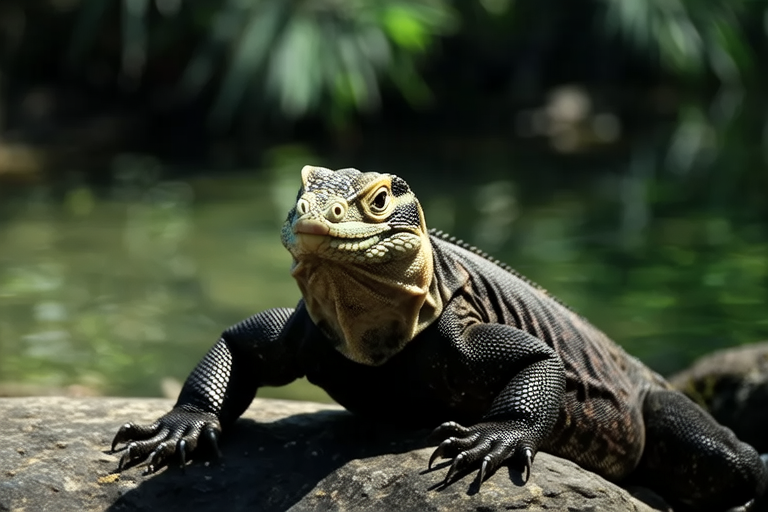
Top 10 Fascinating Facts About the Enigmatic Water Monitor
The water monitor (Varanus salvator) is one of the largest lizards in the world, known for its impressive size, remarkable swimming abilities, and diverse diet. Found across Southeast Asia, this enigmatic creature has captured the interest of scientists and nature enthusiasts alike. Here are ten fascinating facts that highlight the unique characteristics of the water monitor.
1. The Water Monitor: A Giant Among Lizards
The water monitor can grow up to 3 meters (9.8 feet) in length, making it one of the largest lizards on Earth. Adult males typically reach lengths between 1.5 and 2 meters (4.9 to 6.6 feet), with females being slightly smaller. Their muscular bodies and powerful tails allow them to move swiftly through both land and water environments. According to Smithsonian’s National Zoo & Conservation Biology Institute, these lizards can weigh up to 50 kilograms (110 pounds).
2. Diverse Diet: From Snakes to Eggs
Water monitors are opportunistic feeders, meaning they eat whatever food source is available. Their diet includes small mammals, birds, fish, insects, amphibians, and even other reptiles such as snakes and crocodile eggs. They have strong jaws and sharp teeth that help them crush hard-shelled prey like crabs and mollusks. An interesting anecdote from the Journal of Herpetology mentions how a water monitor was observed breaking into a crocodile nest to feast on the eggs.
3. Unique Adaptations for Survival
Water monitors possess several unique adaptations that enable them to thrive in their environment. Their long, forked tongues act as sensory organs, helping them detect chemical signals from potential prey or predators. Additionally, their nostrils are located high on their snouts, allowing them to breathe while partially submerged in water. This adaptation, along with their streamlined bodies and powerful tails, makes them excellent swimmers capable of diving up to 4.5 meters (14.8 feet) deep.
4. Habitat Range and Versatility
Water monitors inhabit a wide range of habitats, including tropical rainforests, mangrove swamps, riverbanks, and coastal areas. They are highly adaptable and can be found in various regions across Southeast Asia, from India to Indonesia. Despite their preference for humid environments, they have also been introduced to parts of Florida, where they have established breeding populations. The International Union for Conservation of Nature (IUCN) notes that their adaptability has allowed them to colonize new territories successfully.
5. Territorial Behavior and Mating Rituals
Water monitors are territorial animals that defend their home ranges aggressively. Male water monitors engage in ritualized combat during the breeding season to establish dominance over females. These battles often involve head-bobbing displays and physical confrontations. Once a male has secured a mate, he will guard her closely until she lays her eggs. Females typically lay clutches of 10 to 50 eggs in termite mounds or burrows, which provide protection and regulate humidity levels.
6. Communication Through Body Language
Water monitors rely heavily on body language for communication. They use a variety of postures, such as raising their heads and flattening their necks, to convey aggression or submission. In addition, they may perform head-bobbing displays or puff out their throats to intimidate rivals. These behaviors play crucial roles in establishing social hierarchies within groups of monitors. A study published in Zoological Studies highlights how these visual cues help prevent unnecessary physical altercations.
7. Lifespan and Longevity
In captivity, water monitors can live for more than 20 years, although their lifespan in the wild is less well-documented. Factors such as predation pressure, disease, and environmental changes likely contribute to shorter lifespans in natural settings. However, under optimal conditions, these lizards can reach advanced ages, showcasing their resilience and adaptability. According to the University of Michigan Museum of Zoology, captive water monitors have been recorded living over two decades.
8. Cultural Significance and Traditional Medicine
Water monitors hold significant cultural importance in many Asian countries. In some regions, they are revered as symbols of strength and power, while in others, they are considered pests due to their predation on domesticated animals. Traditional medicine practices sometimes incorporate parts of the water monitor, particularly its bile, which is believed to have medicinal properties. However, it is essential to note that there is no scientific evidence supporting these claims, and the use of endangered species in traditional medicine should be discouraged.
9. Threats and Conservation Efforts
Despite their widespread distribution, water monitors face numerous threats that could impact their populations. Habitat destruction, illegal trade, and overharvesting for their skin and meat pose significant challenges. Conservation efforts focus on protecting critical habitats, regulating trade, and raising awareness about the importance of preserving these magnificent creatures. Organizations like the Wildlife Conservation Society work tirelessly to safeguard water monitor populations and promote sustainable practices.
10. Research and Future Discoveries
Ongoing research continues to uncover new insights into the biology and behavior of water monitors. Scientists are studying their immune systems, reproductive strategies, and ecological roles within ecosystems. By understanding these aspects better, researchers hope to develop effective conservation plans and management techniques. Furthermore, advances in genetic studies may reveal previously unknown subspecies or variations within the genus Varanus.
In conclusion, the water monitor (Varanus salvator) is a fascinating species with many intriguing traits. From its impressive size and versatile diet to its unique adaptations and cultural significance, this lizard continues to captivate researchers and wildlife enthusiasts worldwide. As we learn more about these remarkable animals, it becomes increasingly clear why conserving their habitats and protecting them from human-induced threats is so vital.
