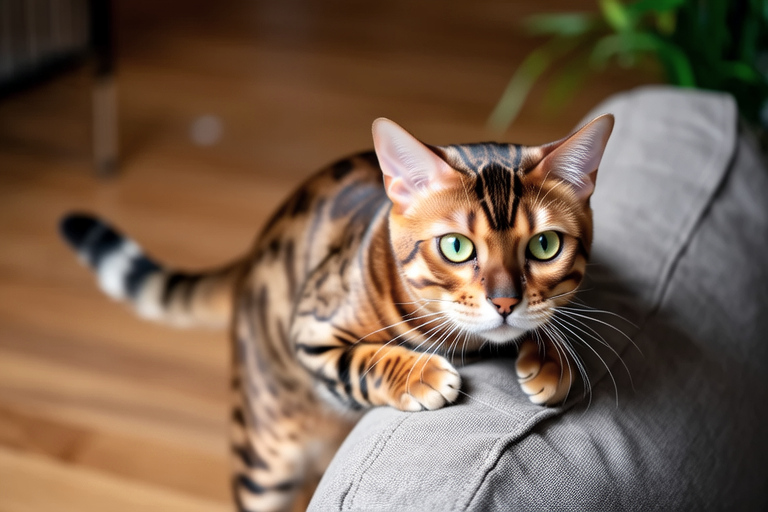
Spots, Stripes, and Super Energy: Life with a Bengal Cat
Welcome to the world of Bengal cats, where every step is an adventure and each day is a new opportunity to marvel at their striking beauty and boundless energy. These felines are not just pets; they are companions who bring a touch of the wild into our homes. Let’s dive into the captivating story of the Bengal cat, exploring its unique appearance, spirited nature, and the joy it brings to those fortunate enough to share their lives.
The Alluring Appearance of Bengal Cats
Bengal cats are instantly recognizable due to their stunning coat patterns. Their fur features spots, stripes, and marbling that resemble those of their wild relatives, the Asian leopard cats. These markings are not merely decorative; they serve as camouflage in the wild, helping the cats blend into their surroundings. The Bengal’s coat is also incredibly soft, often described as feeling like liquid satin. This luxurious texture is a result of generations of selective breeding aimed at enhancing both the appearance and the comfort of the cat.
The most common color variation is the brown tabby, characterized by its rich, golden coat with dark brown or black spots and stripes. However, Bengals come in a variety of colors, including silver, melanistic (black panther), and snow. Each color variation adds its own charm and uniqueness to the breed, making them a favorite among cat enthusiasts.
Origins and Heritage
The Bengal cat is a relatively modern breed, developed in the 1960s through the crossbreeding of domestic cats with Asian leopard cats. Jean Mill, an American breeder, was the first to successfully create a hybrid that retained the wild look of its ancestors while remaining tame and affectionate. Her goal was to combine the exotic beauty of the leopard cat with the friendly nature of domestic cats, and she succeeded brilliantly.
The Asian leopard cat, native to Southeast Asia, is a small wild cat known for its agility and stealth. By introducing this wild bloodline into domestic cats, breeders have managed to create a breed that captures the essence of the jungle without the untamed aggression. Bengal cats, therefore, carry the genetic legacy of their wild cousins, but they are far more approachable and adaptable to home life.
A High-Energy Lifestyle
Bengal cats are not just beautiful; they are also incredibly energetic. Their wild heritage contributes to their playful and adventurous nature. These cats are always ready for a game, whether it’s chasing toys, climbing trees, or exploring every corner of your home. They love water and are known to play with dripping faucets or even bathe in shallow water bowls. Their curiosity and enthusiasm make them excellent companions for active individuals or families looking for a pet that can keep up with their busy lifestyles.
To keep a Bengal cat happy and healthy, it’s essential to provide plenty of opportunities for physical activity. Interactive toys, such as feather wands or laser pointers, can help stimulate their hunting instincts. Climbing structures and scratching posts are also crucial, as they allow Bengals to stretch their muscles and sharpen their claws. Regular play sessions not only satisfy their need for exercise but also strengthen the bond between you and your cat.
Caring for Your Bengal Cat
Feeding a Bengal cat requires attention to detail. Their diet should be rich in protein and low in carbohydrates, reflecting their carnivorous nature. High-quality cat food, preferably grain-free, is recommended to meet their nutritional needs. Fresh water should always be available, and some Bengals enjoy the taste of bottled water over tap water.
Grooming a Bengal cat is generally easy, thanks to their short, dense coats. Weekly brushing can help remove loose hair and prevent matting, especially during shedding seasons. Bathing may be necessary occasionally, particularly if your cat enjoys playing in water. Use a mild, cat-specific shampoo and ensure the water temperature is comfortable for your pet. Regular nail trimming and dental care are also important aspects of maintaining their overall health.
