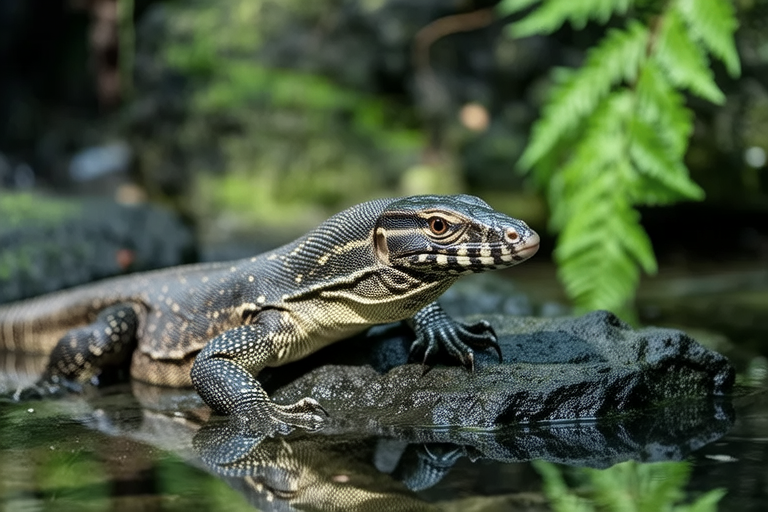
Top 10 Fascinating Facts About Water Monitors
Water monitors (Varanus salvator) are some of the most impressive reptiles on Earth, known for their remarkable size, agility, and adaptability. These lizards are found across Southeast Asia, from India to Indonesia, and they have captured the imagination of wildlife enthusiasts with their unique characteristics and behaviors. In this article, we will explore the top 10 fascinating facts about water monitors that highlight their extraordinary nature.
1. Largest Lizard Species
The water monitor is the second-largest lizard species in the world after the Komodo dragon. Adult males can reach lengths of up to 3 meters (9.8 feet) and weigh as much as 50 kilograms (110 pounds). Their size is a testament to their evolutionary success, allowing them to dominate their environment and outcompete many other predators. Their elongated bodies are covered in tough, scaly skin that provides protection against injuries and helps them regulate their body temperature effectively.
2. Versatile Diet
Water monitors are opportunistic feeders with a diet that varies widely depending on their location and availability of prey. Their menu includes insects, small mammals, birds, fish, amphibians, crustaceans, and even carrion. They have powerful jaws and sharp teeth that enable them to capture and consume a wide range of food items. This adaptability is one of the key factors that contribute to their survival and success in diverse habitats.
3. Diverse Habitat
These lizards are highly adaptable and can thrive in various environments, from dense tropical forests to mangrove swamps, coastal areas, and even urban settings. Water monitors are excellent climbers and spend a significant amount of time in trees, where they can find shelter and prey. They are also strong swimmers and can dive to depths of over 4.5 meters (15 feet), making them at home both on land and in water. Their ability to move effortlessly between different habitats gives them a competitive edge over other species.
4. Exceptional Swimming Abilities
Water monitors are adept swimmers, capable of holding their breath for extended periods, sometimes up to 30 minutes. Their streamlined bodies and powerful tails help them navigate through water efficiently. They can swim at speeds of up to 20 kilometers per hour (12 miles per hour) and use their strong limbs to propel themselves forward. This skill allows them to escape predators and pursue prey in aquatic environments. Additionally, they can dive to impressive depths, which aids in their search for food.
5. Hunting Techniques
Water monitors employ several hunting techniques, depending on the type of prey they target. For smaller animals, they use stealth, creeping up silently before launching a quick strike. When dealing with larger or more dangerous prey, such as venomous snakes or crocodiles, they rely on their speed and agility to catch them off guard. They are also known to dig into burrows and under rocks to extract hidden prey. Their keen sense of smell plays a crucial role in detecting potential meals, and they can follow scent trails for long distances.
6. Intelligence and Problem-Solving Skills
Water monitors are among the most intelligent reptiles, displaying problem-solving skills and learning abilities that are rare in the animal kingdom. They have been observed using tools, such as sticks, to dig for food or defend themselves. Their intelligence enables them to adapt quickly to new situations and environments, which is essential for their survival in dynamic ecosystems. Studies have shown that they can learn from experience and develop strategies to overcome challenges, making them formidable predators.
7. Social Behavior
Despite their solitary nature, water monitors exhibit complex social behaviors that involve communication and interaction with others of their kind. They use a variety of signals, including body posture, vocalizations, and chemical cues, to convey information about territory, mating readiness, and aggression. During breeding season, males engage in ritualized combat to establish dominance and gain access to females. Females lay clutches of up to 40 eggs, which they bury in nests to incubate.
8. Longevity and Lifespan
Water monitors have a relatively long lifespan compared to other reptiles, living up to 20 years in the wild and even longer in captivity. Their longevity is attributed to their robust health and adaptability, which allow them to survive in harsh conditions. However, their lifespan can be significantly reduced by environmental pressures, such as habitat destruction and human interference. Conservation efforts are essential to ensure the survival of this magnificent species.
9. Adaptation to Urban Environments
In recent years, water monitors have become increasingly common in urban areas, particularly in cities like Singapore and Jakarta. They have adapted well to life in the city, scavenging for food in garbage bins and finding refuge in parks and gardens. Their presence in urban settings has raised awareness about the importance of coexistence between humans and wildlife. While they can be beneficial in controlling pest populations, they also pose risks to domestic pets and can carry diseases. Proper management and education are necessary to maintain a balance between human and monitor lizard interactions.
10. Cultural Significance
Water monitors hold a special place in the folklore and culture of many Southeast Asian countries. In some regions, they are revered as sacred animals and are believed to bring good luck. In others, they are feared and considered bad omens. Their cultural significance reflects the deep connection between humans and nature in these societies. Despite their mythical status, water monitors face threats from habitat loss, poaching, and the pet trade. Conservation initiatives are vital to protect these iconic creatures and preserve their cultural heritage.
In conclusion, water monitors are fascinating creatures with a unique set of characteristics and behaviors that make them stand out in the animal kingdom. From their impressive size and versatile diet to their exceptional swimming abilities and problem-solving skills, these lizards continue to captivate and inspire those who study and admire them. By understanding and appreciating their ecological role and cultural significance, we can work towards ensuring their survival and prosperity for generations to come.
