Arowana Wonders: Discovering the Myth and Magic Behind This Aquatic Gem
In the realm of freshwater fish, few species command as much reverence and fascination as the arowana. Known for its striking appearance, mythical origins, and unique behaviors, the arowana has long been an object of awe for aquarists and cultural enthusiasts alike. This article delves into the rich history, mythology, and science behind these captivating creatures, offering insights for both seasoned hobbyists and curious newcomers.
Mythical Beginnings and Cultural Significance
The arowana’s journey through time is intertwined with myth and legend. In many Asian cultures, particularly in countries like Malaysia, Indonesia, and Singapore, the arowana is revered as a symbol of good fortune and prosperity. Legends speak of the arowana as a guardian of wealth, and owning one is believed to bring financial success and protection from misfortune. These beliefs have contributed to the arowana’s status as a highly sought-after pet in parts of Southeast Asia.
One of the most enduring myths about the arowana is its supposed ability to leap out of water to catch birds mid-flight. While this behavior is indeed observed in the wild, it is more of a survival tactic than a display of supernatural prowess. Arowanas are known to leap from the water to capture insects or small birds that come too close to the surface. This behavior has added to their mystique, making them even more intriguing to observers.
Physical Characteristics and Habitat Requirements
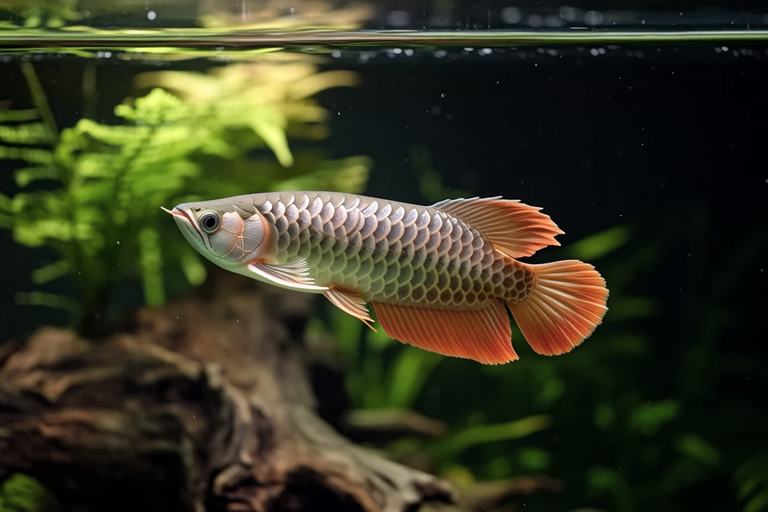
Arowanas possess a sleek, elongated body with a prominent dorsal fin that runs along their back, giving them a distinctively regal appearance. Their scales are large and iridescent, reflecting colors ranging from metallic green to deep red, depending on the species. The arowana’s mouth is equipped with powerful jaws and sharp teeth, designed for capturing and holding onto prey.
Native to tropical regions, arowanas thrive in warm, well-oxygenated waters. They prefer environments with dense vegetation, submerged logs, and plenty of hiding spots. In the wild, they can be found in rivers, lakes, and flooded forests. When setting up an aquarium for arowanas, it is crucial to replicate these conditions as closely as possible. The tank should be spacious, with at least 300 liters of water per adult fish, and equipped with robust filtration systems to maintain water quality.
Dietary Needs and Feeding Habits
Arowanas are carnivorous predators, feeding primarily on live prey such as insects, small fish, crustaceans, and occasionally birds. In captivity, they can be fed a diet of high-quality pellets, frozen or freeze-dried foods, and occasional live feedings. It is important to ensure that the food provided is appropriate for their size and nutritional needs. Overfeeding can lead to health issues, so it is recommended to feed them once or twice daily, depending on their activity level.
Tips for Aquarium Setup and Maintenance
Setting up an aquarium for arowanas requires careful planning and attention to detail. Start by selecting a tank that provides ample space for the fish to swim freely. A minimum of 60 cm in length is recommended for a single arowana, but larger tanks are preferable for multiple specimens. Use a strong filtration system capable of handling the bioload generated by these active fish. Regular water changes and monitoring of water parameters are essential to maintaining a healthy environment.
Decorate the tank with driftwood, rocks, and plants to create a naturalistic setting. Provide hiding spots to reduce stress and promote a sense of security. Lighting should be subdued to mimic the dim conditions found in their native habitats. Additionally, consider incorporating a heater to maintain a stable temperature between 24°C and 28°C, as arowanas are sensitive to temperature fluctuations.
Conservation Efforts and Sustainable Practices
The popularity of arowanas as pets has led to overfishing in some regions, threatening wild populations. To address this issue, many countries have implemented strict regulations on the trade and export of arowanas. In response, sustainable breeding programs have been established to meet demand while minimizing pressure on wild stocks. These programs focus on responsible breeding practices, ensuring that the genetic diversity of captive populations is maintained.
For potential owners, it is crucial to choose reputable breeders who adhere to ethical standards. Look for certifications or accreditations that guarantee the origin and treatment of the fish. By supporting these initiatives, you contribute to the preservation of arowana species and help ensure their future in both the wild and captivity.
Conclusion
The arowana is more than just a beautiful fish; it is a living testament to the wonders of nature and the power of cultural traditions. Whether you are drawn to its mythical allure or captivated by its striking appearance, there is no denying the magic of this aquatic gem. By understanding their needs and respecting their place in the ecosystem, we can continue to enjoy the beauty and mystery of arowanas for generations to come.
