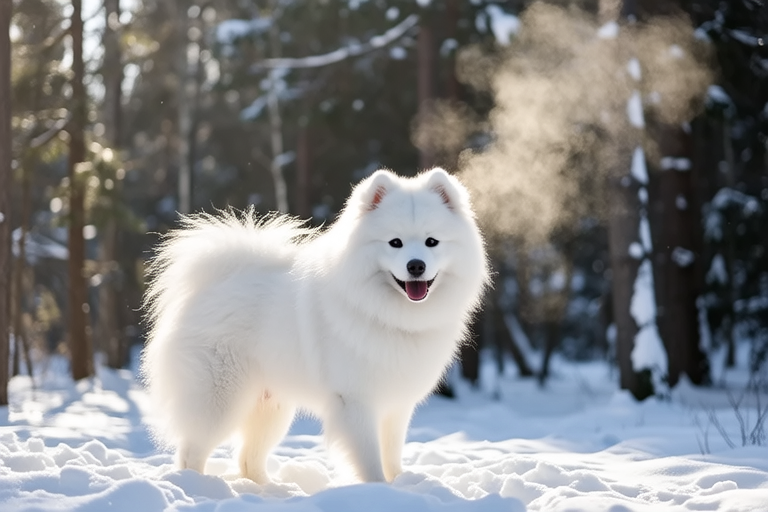
Samoyed: The Ultimate Companion for Winter Adventures
The Samoyed, known for its fluffy white coat and friendly demeanor, is a breed that thrives in cold weather conditions. This article explores why the Samoyed is the ultimate companion for winter adventures, detailing their physical traits, temperament, energy levels, and adaptability to winter climates. We’ll also cover training tips specific to winter environments, grooming needs, safety considerations, and provide examples of winter activities where Samoyeds excel.
Physical Traits Suited for Cold Weather
One of the most striking features of the Samoyed is its thick double coat, which consists of a soft undercoat and a harsh outer coat. This dual-layered coat provides excellent insulation against the cold, making it perfect for snowy and icy conditions. Additionally, the Samoyed’s dense fur traps heat close to the body, ensuring they stay warm even during prolonged exposure to freezing temperatures.
Another key physical trait is their robust build, characterized by broad chests and strong legs. These attributes allow Samoyeds to navigate through deep snow with ease, making them well-suited for activities like sledding or skiing. Their compact size also means they don’t overheat as quickly as larger breeds, allowing them to maintain optimal performance in colder climates.
Temperament and Energy Levels
Samoyeds are renowned for their friendly and sociable nature, often referred to as “smiling” due to their natural facial expressions. This outgoing personality makes them great companions for outdoor adventures, as they enjoy spending time with their human families and other dogs. Their high energy levels ensure they are always ready for action, whether it’s playing fetch in the snow or accompanying you on long hikes.
However, it’s important to note that while Samoyeds have boundless energy, they can become destructive if not properly exercised. Therefore, engaging in regular physical activities is crucial to keeping your Samoyed happy and healthy. Whether it’s running alongside you on skis or pulling a sled, these dogs thrive when given the opportunity to burn off excess energy.
Adaptability to Winter Climates
Samoyeds have a long history of living in harsh Arctic environments, where they were used by indigenous peoples for hunting and transportation. This heritage has equipped them with an innate ability to adapt to various winter conditions. They are comfortable in sub-zero temperatures and can withstand prolonged exposure without experiencing discomfort.
Moreover, their resilience extends beyond just physical endurance; Samoyeds also possess mental fortitude, remaining calm and composed even in challenging situations. This characteristic is particularly beneficial during winter expeditions, where unexpected obstacles may arise.
Training Tips Specific to Winter Environments
When training your Samoyed for winter adventures, consistency and positive reinforcement are essential. Start by introducing basic commands such as “sit,” “stay,” and “come” in familiar settings before gradually transitioning to more complex tasks in different environments.
For example, teaching your Samoyed to heel properly is especially important when walking on slippery surfaces. Begin by practicing on flat ground until your dog masters the command, then move to areas with snow or ice. Always reward good behavior with treats or praise to reinforce desired actions.
Grooming Needs in Cold Weather
Maintaining proper grooming practices ensures your Samoyed remains comfortable throughout the winter months. Regular brushing helps remove loose hair and prevents matting, which could lead to discomfort or health issues.
In addition to routine brushing, consider investing in protective gear such as booties to shield their paws from salt and chemicals commonly found on sidewalks during winter. Applying paw wax can further enhance protection against cold surfaces.
Safety Considerations When Taking Samoyeds on Outdoor Adventures
Before embarking on any winter adventure with your Samoyed, ensure they are properly acclimated to the cold. Gradually expose them to lower temperatures by taking short walks initially and increasing duration as they adjust.
It’s also vital to monitor your dog’s hydration levels, as dehydration can occur even in cold weather. Bring along fresh water in insulated containers to keep it from freezing. Lastly, be mindful of signs indicating your Samoyed might be too cold, such as shivering, lethargy, or reluctance to move.
Winter Activities Samoyeds Excel In
Sledding is one of the most popular winter activities enjoyed by many Samoyed owners. With their strength and stamina, these dogs make excellent sled pullers, capable of handling moderate loads over long distances.
Another favorite pastime among Samoyed enthusiasts is cross-country skiing. Many owners report that their dogs love racing alongside them, creating an exhilarating experience for both parties involved.
Anecdotes and Testimonials
“My Samoyed, Max, loves nothing more than pulling me through the snow on his sled,” says Jane Doe, a lifelong Samoyed owner. “He gets so excited whenever we head out for our weekly adventure, and I can’t imagine doing this activity with any other breed.”
John Smith adds, “Taking my Samoyed, Lucy, cross-country skiing has been one of the highlights of our winter season. Her enthusiasm never wanes, and she always manages to keep up with me, no matter how fast I go.”
Conclusion
The Samoyed truly embodies the spirit of winter, offering companionship and joy during some of the coldest months of the year. Their unique combination of physical traits, temperament, and adaptability makes them ideal partners for those seeking thrilling outdoor experiences. By following proper training techniques, maintaining appropriate grooming practices, and prioritizing safety measures, you can ensure that both you and your Samoyed will have memorable adventures together.
