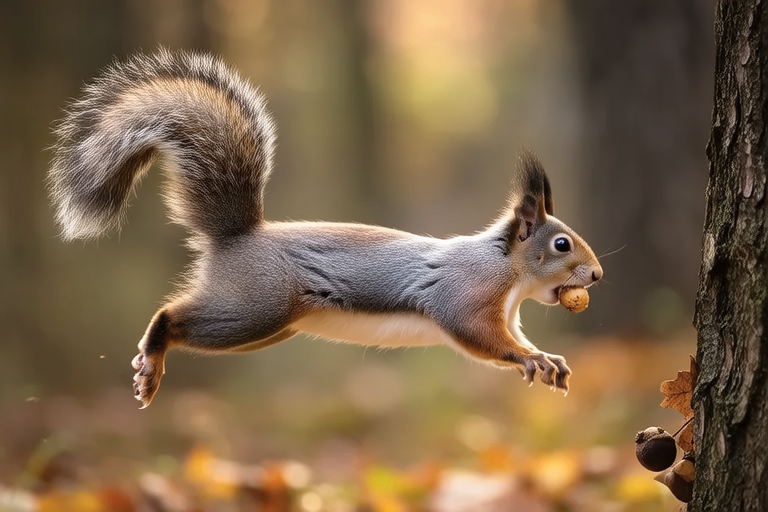
Meet the Acrobatic Athletes of Your Backyard: The Incredible Squirrel
Welcome to the world of the backyard’s most dynamic performers – the squirrels. These small but mighty creatures are not just common sights in our gardens; they are acrobatic athletes that captivate us with their agility, intelligence, and adaptability. Whether you’re a seasoned wildlife enthusiast or someone who enjoys observing nature from your window, this article will take you on a journey through the fascinating life of these incredible animals.
The Physical Marvels Behind the Acrobatics
Squirrels are equipped with a suite of physical attributes that allow them to perform feats that would be the envy of Olympic gymnasts. Their muscular hind legs provide powerful propulsion for leaps that can span gaps between trees or even across your backyard fence. With each leap, they demonstrate remarkable precision and control, often landing gracefully on narrow branches or rooftops. Their sharp claws grip onto surfaces with ease, ensuring they don’t lose their footing, no matter how precarious the situation.
But it’s not just their limbs that make squirrels such accomplished acrobats. Their flexible spines enable them to twist and turn mid-air, while their bushy tails act as both a rudder for steering and a stabilizer during landings. This tail also doubles as a blanket when temperatures drop, providing insulation against the cold. It’s hard not to admire the sleek, streamlined bodies of these animals as they move effortlessly through their environment.
The Brain Behind the Brawn
While their physical prowess is impressive, squirrels’ intelligence is equally remarkable. They possess a keen sense of spatial awareness and memory, which they use to navigate complex environments and find food sources. One of the most fascinating aspects of squirrel behavior is their ability to cache food. These creatures have an uncanny knack for remembering where they’ve hidden nuts and seeds, often retrieving them months later with astonishing accuracy.
Recent studies have shown that squirrels can employ sophisticated strategies to protect their caches from theft. For example, they sometimes engage in what scientists call ‘deceptive caching,’ where they pretend to bury a nut to mislead potential thieves. By watching and learning from other squirrels, they refine their tactics, demonstrating a level of social intelligence that challenges our understanding of animal cognition.
Adaptability in Action
Squirrels are highly adaptable creatures, thriving in diverse habitats ranging from dense forests to urban parks. In cities, they have embraced human-made structures as part of their environment, climbing up buildings and scurrying along power lines with apparent ease. Their adaptability extends beyond their habitat preferences; they also adjust their diets based on seasonal availability, eating everything from fruits and fungi to insects and bird eggs.
This adaptability is crucial for their survival, especially in changing environments. As urbanization continues to encroach on natural habitats, squirrels have proven adept at finding new ways to coexist with humans. They have learned to exploit human-provided resources, such as bird feeders and discarded food, without compromising their independence. This resilience makes them one of the most successful species in adapting to human-altered landscapes.
Interactions Within Ecosystems
Squirrels play vital roles in their ecosystems, acting as seed dispersers and helping maintain forest health. By caching nuts and seeds, they inadvertently aid in the regeneration of trees and plants. Some of the seeds they bury may never be retrieved, allowing new plants to grow in areas where they wouldn’t otherwise thrive. This behavior underscores the intricate web of relationships within ecosystems and highlights the importance of even the smallest animals.
However, squirrels also face challenges within their ecosystems. Predation by birds of prey, such as hawks and owls, is a constant threat, requiring squirrels to remain vigilant. They rely on their speed, agility, and keen senses to evade predators. Despite these risks, squirrels continue to thrive, thanks in part to their remarkable abilities.
Unique Survival Strategies
One of the most unique survival strategies employed by squirrels is their ability to enter torpor, a state similar to hibernation but less intense. During periods of extreme cold or food scarcity, squirrels can lower their body temperature and metabolic rate, conserving energy until conditions improve. This adaptation allows them to survive harsh winters when food is scarce.
Another interesting aspect of squirrel behavior is their tendency to engage in ‘play fighting.’ While this behavior might seem trivial, it serves important developmental purposes. Through playful interactions, young squirrels learn essential skills such as hunting, defense, and cooperation. These early lessons prepare them for the challenges they will face as adults, ensuring the continuation of their species.
Scientific Discoveries About Squirrels
Recent scientific research has shed light on various aspects of squirrel behavior and biology. For instance, studies have revealed that squirrels can recognize individual faces and even differentiate between friendly and threatening humans. This ability to identify specific individuals is particularly useful in urban settings, where squirrels encounter many different people daily.
Additionally, researchers have discovered that squirrels exhibit distinct personalities, much like humans. Some squirrels are bold and adventurous, while others are more cautious and reserved. These personality traits influence how squirrels interact with their environment and each other, adding another layer of complexity to their behavior.
Captivating Wildlife in Your Own Backyard
So, the next time you see a squirrel darting through your garden or perched on a rooftop, take a moment to appreciate the incredible creature before you. Observe its acrobatic leaps, its clever caching, and its interactions with other animals. By doing so, you’ll gain a deeper understanding of the role these animals play in our ecosystems and the fascinating world they inhabit.
In conclusion, squirrels are not just charming backyard visitors; they are acrobatic athletes, intelligent problem-solvers, and resilient survivors. Their presence enriches our lives and reminds us of the beauty and complexity of the natural world. Let us continue to marvel at these incredible creatures and strive to protect the habitats that support them.
