Training Tips for Every Siberian Husky Owner: A Comprehensive Guide
Siberian Huskies are known for their striking appearance, friendly demeanor, and robust health. However, these beautiful dogs also come with unique challenges that require special training techniques to ensure they become well-behaved and happy companions. This guide will provide you with valuable insights into understanding your Siberian Husky’s traits, essential training methods, and tips for handling common behavioral issues.
Understanding Siberian Huskies’ Unique Traits
Siberian Huskies are descendants of sled dogs, bred for stamina and endurance. They are intelligent, independent, and full of energy. These traits make them excellent working dogs but can also lead to behavioral issues if not properly managed. Huskies have a strong prey drive and may chase smaller animals. They are also notorious escape artists, capable of digging under fences or squeezing through small openings.
One of the most important aspects of owning a Siberian Husky is understanding their pack mentality. They thrive in environments where they feel part of a pack, and this can be achieved by providing consistent leadership and clear boundaries. It is crucial to establish yourself as the alpha in your household to avoid dominance struggles.
Essential Basic Obedience Training Techniques
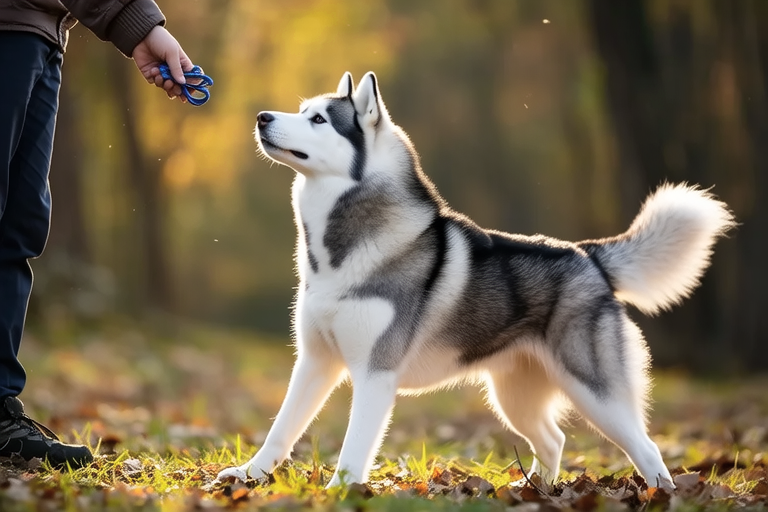
Basic obedience training is fundamental for any dog, but it is especially important for Siberian Huskies due to their independent nature. Start with simple commands such as ‘sit’, ‘stay’, ‘come’, and ‘leave it’. Use positive reinforcement, rewarding your Husky with treats, praise, and affection when they follow commands correctly.
Consistency is key in training. Always use the same command words and hand signals to avoid confusing your dog. For example, if you teach your Husky to ‘sit’ by saying ‘sit’ and pointing down, always use the same phrase and gesture during training sessions. This consistency helps your dog learn more quickly and reinforces the desired behavior.
It’s also important to train in short, frequent sessions. Huskies have short attention spans, so keeping training sessions brief and engaging will help maintain their interest and prevent frustration.
Strategies for Managing Their High Energy Levels
Huskies are known for their boundless energy, which can sometimes lead to destructive behaviors if not properly channeled. Regular exercise is crucial to keep your Husky physically and mentally stimulated. Aim for at least two hours of physical activity per day, including walks, runs, and playtime. Consider enrolling your Husky in agility classes or other activities that challenge their mind and body.
In addition to physical exercise, mental stimulation is equally important. Provide your Husky with puzzle toys, interactive games, and training sessions that engage their intellect. Mental exercises can include teaching new tricks, practicing obedience commands, or playing hide-and-seek with treats.
Creating a routine can also help manage your Husky’s energy levels. Dogs thrive on predictability, and having a set schedule for meals, walks, and playtime can help reduce anxiety and hyperactivity.
Effective Leash Training Methods
Leash training is essential for safe and enjoyable walks with your Husky. Start by introducing your dog to the leash in a calm, controlled environment. Allow them to sniff and explore while wearing the leash, gradually increasing the duration of these sessions. Once your Husky is comfortable with the leash, begin walking them around the house and yard, ensuring they stay close to you.
During walks, focus on maintaining control without being overly restrictive. Encourage your Husky to walk beside you by rewarding them with treats and praise when they stay close. If your Husky pulls ahead, stop walking and wait for them to return to your side before continuing. This teaches them that pulling results in no progress, while walking calmly leads to rewards.
For more advanced leash training, consider incorporating a harness instead of a traditional collar. Harnesses distribute pressure more evenly across your Husky’s chest, reducing strain on their neck and improving control during walks.
Advice on Socialization
Proper socialization is vital for all dogs, but it is particularly important for Siberian Huskies due to their strong prey drive and independent nature. Expose your Husky to various people, animals, and environments from an early age to help them develop confidence and good manners.
Begin socialization efforts during puppyhood, taking your Husky to puppy classes, dog parks, and other areas where they can interact safely with other dogs and humans. Gradually introduce your Husky to different sounds, sights, and experiences to build their resilience and adaptability.
When introducing your Husky to new situations, always prioritize safety and comfort. Keep initial interactions brief and positive, gradually increasing the duration and complexity of encounters as your Husky becomes more confident. Remember, socialization is an ongoing process that should continue throughout your Husky’s life.
Solving Common Behavioral Issues
Despite your best efforts, behavioral issues may arise with your Siberian Husky. Some common problems include excessive barking, chewing, and digging. Addressing these issues requires patience, consistency, and appropriate training techniques.
Excessive barking can be managed by identifying the triggers and addressing them directly. For example, if your Husky barks excessively when left alone, consider crate training or providing a comfortable space with a favorite toy or blanket. Teach your Husky the ‘quiet’ command by rewarding them with treats and praise when they stop barking.
Destructive chewing can often be alleviated by providing appropriate chew toys and redirecting your Husky’s attention to these items when they start chewing on inappropriate objects. Praise and reward your Husky when they choose a suitable chew toy over household items.
Digging is another common issue that can be addressed by providing your Husky with a designated digging area, such as a sandbox. Encourage your Husky to use this area by praising them when they dig there and redirecting them if they attempt to dig elsewhere.
Maintaining a Positive Reinforcement Approach Throughout Training
Positive reinforcement is the foundation of effective training for Siberian Huskies. This approach focuses on rewarding desired behaviors rather than punishing unwanted ones, fostering a strong bond between you and your dog. By using treats, praise, and affection, you can motivate your Husky to repeat desirable actions.
It’s important to tailor your training methods to your Husky’s individual needs and preferences. Some Huskies respond better to verbal praise, while others are more motivated by food rewards. Experiment with different types of rewards to find what works best for your dog.
Avoid harsh punishment or negative reinforcement, as these methods can lead to fear, aggression, and a breakdown in trust. Instead, focus on building a positive relationship with your Husky based on mutual respect and understanding. Consistent, patient training using positive reinforcement will yield long-lasting results and create a well-behaved, happy companion.
